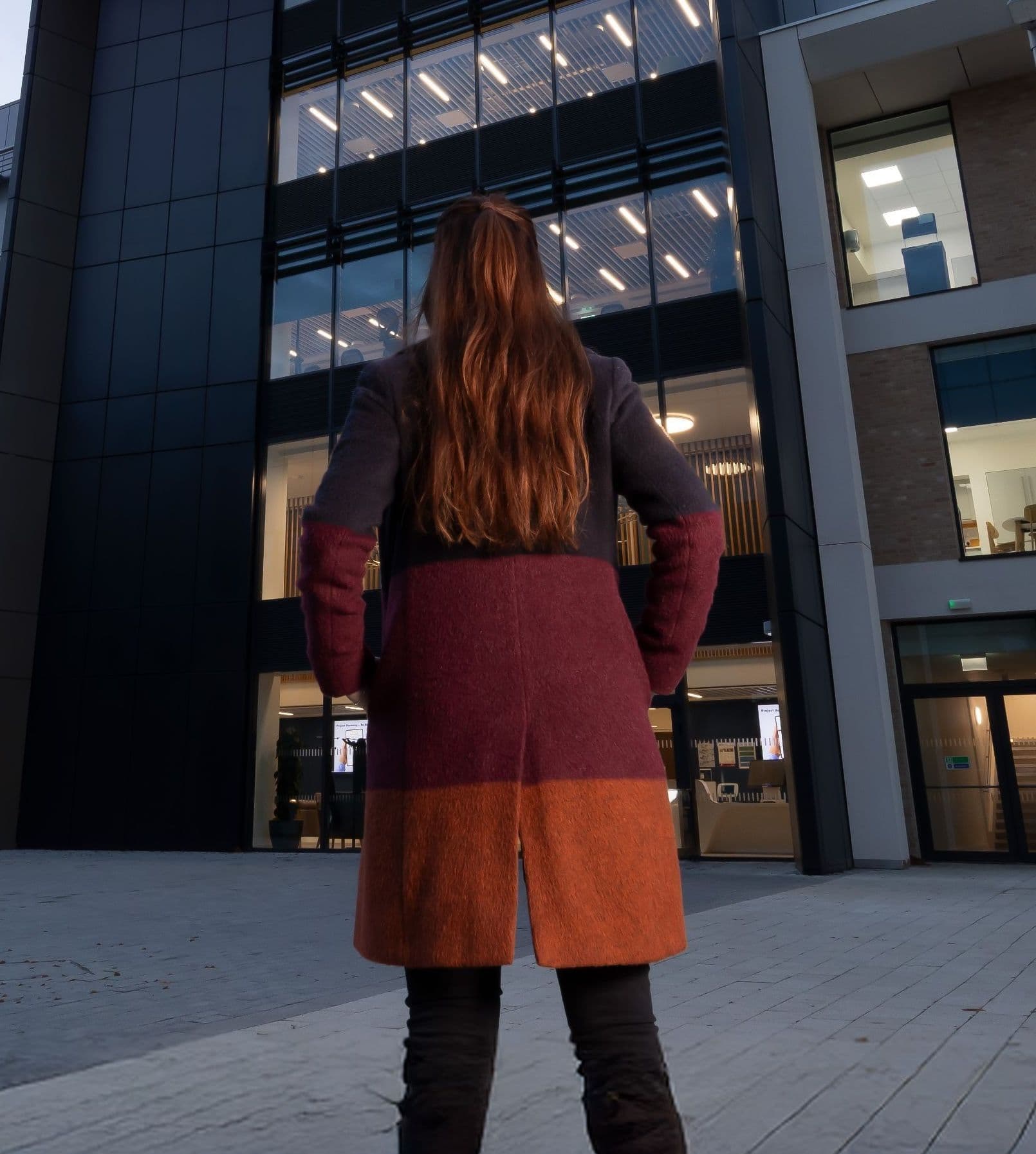
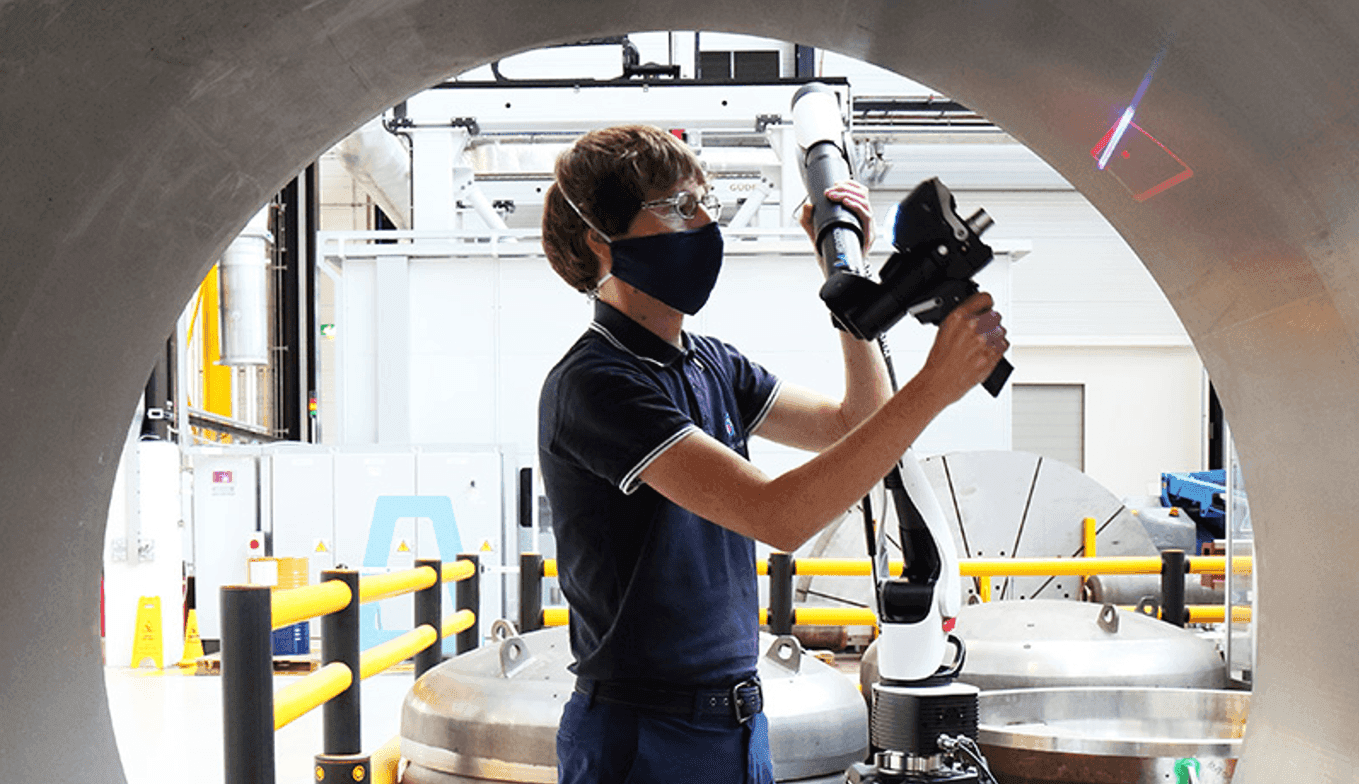
Cliona
Nuclear Engineer
"Take every opportunity to learn."

Cliona’s journey from A-Levels to nuclear engineering
Cliona's journey into nuclear engineering demonstrates how an apprenticeship can provide young people, and particularly young women, with a route into traditionally male-dominated fields.
We walk you through Cliona’s typical day as an apprentice, the skills that have helped shape her progression, and her advice for anyone considering a similar pathway, particularly women weighing up a career in engineering.

From early inspiration to career fulfilment
Cliona's interest in nuclear technology emerged during the final year of her A levels.
At the time, she was completing an Extended Project Qualification (EPQ), which helped develop her interest in the subject and encouraged her to investigate nuclear as a potential career.
Rather than waiting until after university to enter the industry, Cliona decided to pursue a Degree Apprenticeship with BAE Systems Submarines.
The programme provided a way to combine higher education with practical engineering experience inside the organisation.
Before beginning the apprenticeship, Cliona had already demonstrated an ability to balance different responsibilities by combining her studies with part-time employment.
Those organisational and time-management abilities would prove valuable once she entered the much more demanding environment of a nuclear engineering apprenticeship.

A day in the life of a nuclear engineer apprentice
Cliona's typical working day is built around teamwork, communication, and continual learning.
Work begins with a handover from the previous shift, which allows Cliona and her colleagues to understand what has already happened, remaining tasks, and any issues that need attention.
Once that handover is complete, tasks are distributed among the team. Engineers then work together to complete them, following the specific procedures required for different elements of the programme.
Documentation throughout the day is an important part of the process. As work progresses, engineers record what they have done and communicate relevant information so that the next team has an accurate picture of the project's status. Towards the end of the day, that information supports another handover — this time to the night-shift team.
The cycle illustrates how nuclear engineering depends not only on individual technical ability but also on disciplined communication between people working across different shifts.

An opportunity for growth
Cliona's experience shows that succeeding in the sector requires a willingness to continue learning throughout your career.
People with extensive experience surround apprentices, so receiving constructive feedback is paramount to personal growth.
Working as part of a supportive team means Cliona can learn directly from experienced professionals while gradually developing greater confidence and capability herself.
The combination of formal education, practical engineering work and support from colleagues makes the apprenticeship an especially valuable route into the profession.

Supporting the next wave of nuclear talent
Cliona strongly recommends the apprenticeship route for its opportunity to develop both practical skills and technical knowledge in a real-world engineering environment.
Her principal advice to someone beginning a similar career is to take every opportunity to learn and actively engage with the work, rather than simply completing assigned tasks.
She emphasises the importance of seeking knowledge from experienced colleagues, encouraging collaboration, asking questions, and drawing on their experience to develop a deeper understanding of the working practices around them. “The more somebody engages with those opportunities, the stronger the foundation they can build for their future career.”
Cliona's experience is particularly relevant to young women considering engineering. Her journey demonstrates that a Degree Apprenticeship can provide a practical route into nuclear, allowing someone to gain substantial hands-on experience while simultaneously working towards a degree.

Your questions, answered honestly
Nuclear engineer apprentice FAQs
What’s the average salary for an apprentice engineer?
In the UK, engineering apprenticeships in the nuclear sector are above average, with starting salaries typically £25,000 and rising to £45,000 in the later stages of an apprenticeship.
Nuclear boasts some of the best career perks, and high salaries are just one of them. Visit our benefits page to discover more of what the industry has to offer.
What apprenticeships are available in the nuclear sector?
Whether you’re just finishing school and hoping to earn a qualification through an apprenticeship, or are looking for a fresh start, you can browse available apprenticeships to find the pathway that’s right for you.
How do I know which pathway is right for me?
If you’re not sure whether an engineering apprenticeship is right for you, there are plenty of other routes into nuclear. With roles in project management, cybersecurity, and welding available, the sector offers a wide range of pathways for people ready to build a long‑term, future‑proof career.
Why not take our career fit quiz? It can help you identify where your skills could take you.
NOT SURE WHERE TO START?
Take the careers quiz
Answer a few quick questions about your background and we'll point you to roles that match your experience.
READY TO APPLY?
Browse live roles
Explore mechanical, electrical, planning, and operations roles currently open across the UK.
More stories
Others who made the switch